
By Admin Orunodoi.co.in 25 Dec 2025 5:00 AM
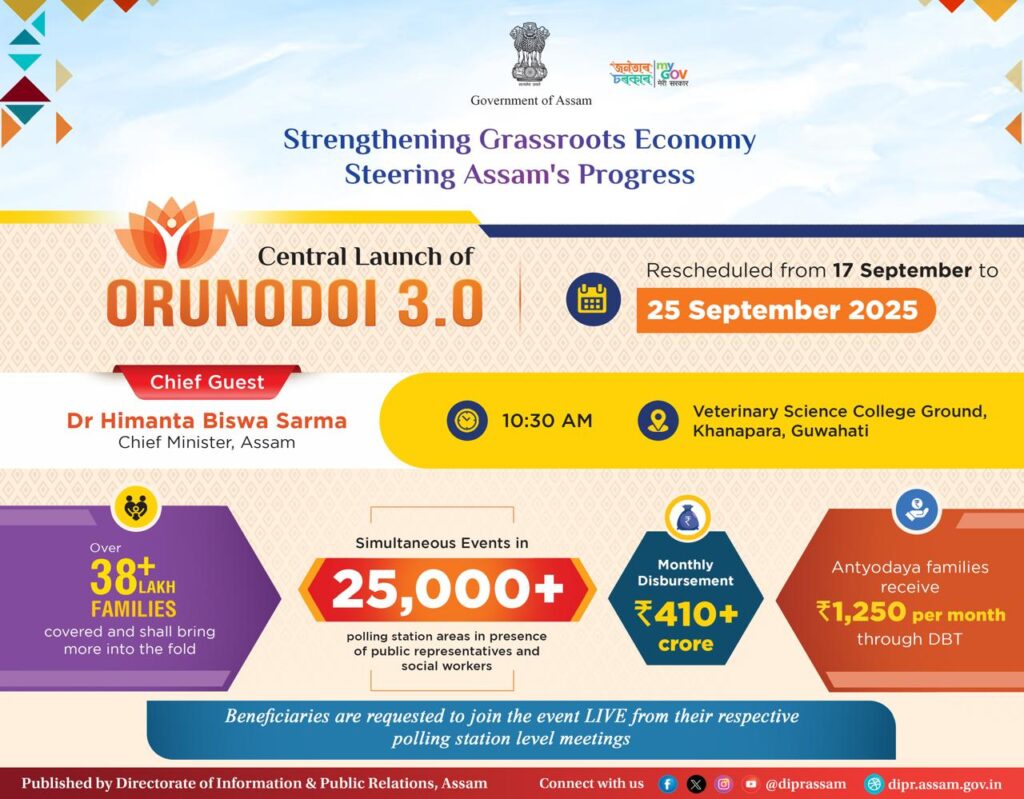
For many families across Assam, orunodoi 3.0 is not just another government scheme—it is monthly support they depend on for basic household needs. Naturally, people want clear answers about eligibility, monthly amount, and whether their name will appear in the Orunodoi beneficiary list Assam. This article explains everything in a simple, professional, and human way, without confusion or exaggeration.
What Is Orunodoi 3.0?
Orunodoi 3.0 is the latest upgraded phase of the Orunodoi welfare scheme launched by the Assam Government. The scheme provides monthly financial assistance directly to eligible women beneficiaries through Direct Benefit Transfer (DBT).
This phase was introduced to:
- Increase the monthly support amount
- Cover more low-income households
- Improve transparency in beneficiary selection
Compared to earlier versions, orunodoi 3.0 has a wider reach and a higher financial benefit.
Orunodoi 3.0 Latest News (Current Status)
As per the latest officially available updates:
- Orunodoi 3.0 is active across Assam districts
- Coverage has expanded to include new beneficiaries identified by local authorities
- Payments are being released monthly through DBT to verified bank accounts
Selection and verification are handled at the gaon panchayat, ward, and district level, which is why timelines may differ from one area to another.
Orunodoi Scheme Amount 2025
Under orunodoi 3.0, the financial assistance amount has been enhanced.
Monthly benefit:
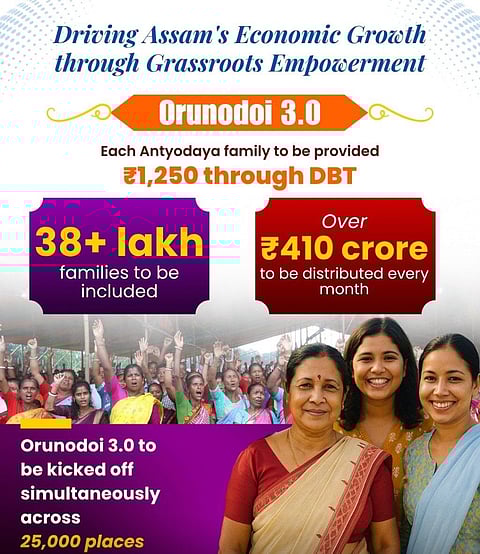
₹1,250 per beneficiary household
This amount is credited every month directly to the beneficiary woman’s bank account. The increase was introduced to better support rising household expenses such as food, medicines, and essential needs.

Orunodoi 3.0 Eligibility Criteria (Who Can Get It)
To be considered eligible for orunodoi 3.0, the following conditions generally apply:
- The applicant must be a permanent resident of Assam
- The beneficiary must be a woman from the household
- The family should belong to an economically weaker section
- Priority is given to households already identified through ration card and socio-economic data
- The applicant must have:
- Aadhaar-linked bank account
- Valid identity and residence documents
Final selection is done only after local verification, so meeting criteria alone does not guarantee inclusion.
Orunodoi 3.0 Application Form: How the Process Works
Many people search online for the orunodoi 3.0 application form, but it is important to understand how applications actually work.
At present:
- Applications are not accepted through a permanent online portal
- Forms are collected and verified offline through gaon panchayats or urban local bodies
- Beneficiaries are identified through surveys, existing records, and local recommendations
If a new enrollment drive is announced, the application form is usually made available through local authorities first.
Required Documents for Verification
During application or verification, the following documents are commonly required:
- Aadhaar card
- Bank passbook (DBT-enabled account)
- Ration card
- Proof of residence in Assam
- Income-related declaration (if asked)
Providing correct documents is essential to avoid rejection or payment delays.
Official Government Portals (Most Important)
- Finance Department, Assam – Orunodoi Portal
https://finance.assam.gov.in/portlets/orunodoi-30
Best source for official scheme overview, updates, and government notices. - Government of Assam (Main Portal)
https://assam.gov.in
Used to cross-check policy announcements and cabinet decisions.
DBT, Aadhaar & Banking Verification Links
- UIDAI – Aadhaar Services
https://uidai.gov.in
Useful for Aadhaar updates, linking issues, and verification problems. - NPCI – DBT/Aadhaar Bank Mapping
https://www.npci.org.in
Helpful reference for DBT-related bank mapping and payment issues. - Public Financial Management System (PFMS)
https://pfms.nic.in
Used nationally to track DBT fund flow and payment status explanations.
Ration Card & Eligibility Support
- Food, Civil Supplies & Consumer Affairs Department, Assam
https://fcsca.assam.gov.in
Relevant because ration card data is often used in beneficiary identification.
District & Local Administration
- District Administration Assam (Directory)
https://districts.assam.gov.in
Helps users find their district website for beneficiary lists and notices.
How to Check Orunodoi Beneficiary List Assam
The orunodoi beneficiary list assam is not always published in a single statewide online list. Instead, beneficiaries can check their status through:
- Gaon panchayat or ward office notice boards
- Local officials involved in Orunodoi verification
- District-level announcements when available
If your name does not appear, it may be due to pending verification, document mismatch, or limited quota in your area.
Common Issues Faced by Beneficiaries
Some frequent problems reported by beneficiaries include:
- Payment delayed due to bank or Aadhaar mismatch
- Name approved but amount not credited
- Application submitted but no update received
In most cases, these issues are resolved by correcting bank details or completing re-verification through local offices.
Frequently Asked Questions
Is orunodoi 3.0 different from earlier versions?
Yes. Orunodoi 3.0 has a higher monthly amount and expanded beneficiary coverage.
How much money is given under orunodoi scheme amount 2025?
₹1,250 per month is provided through DBT.
Can I apply online for orunodoi 3.0?
Currently, applications are handled offline through local authorities.
Who decides the final beneficiary list?
Selection is done by local verification committees under government guidelines.
What if my name is not in the beneficiary list?
You can contact your gaon panchayat or ward office for clarification and guidance.
Disclaimer
This article is written for general informational purposes only. Scheme rules, eligibility conditions, amounts, and application processes are subject to change based on official government notifications. Beneficiaries are strongly advised to verify details through official Assam Government departments, local authorities, or authorized government portals. This content does not guarantee inclusion in the scheme and should not be treated as an official document.
Final Note
Orunodoi 3.0 continues to play a crucial role in supporting women-led households across Assam. Understanding the eligibility rules, payment amount, and verification process helps families stay informed and prepared. Always rely on official sources and local authorities for final confirmation, and avoid misinformation shared on social media or unofficial platforms.