Breakthrough: Orunodoi Payments Skyrocket to ₹1,500 in 2026 – Complete Guide Inside
By Admin Orunodoi.co.in 15 Dec 2025 9:56 AM
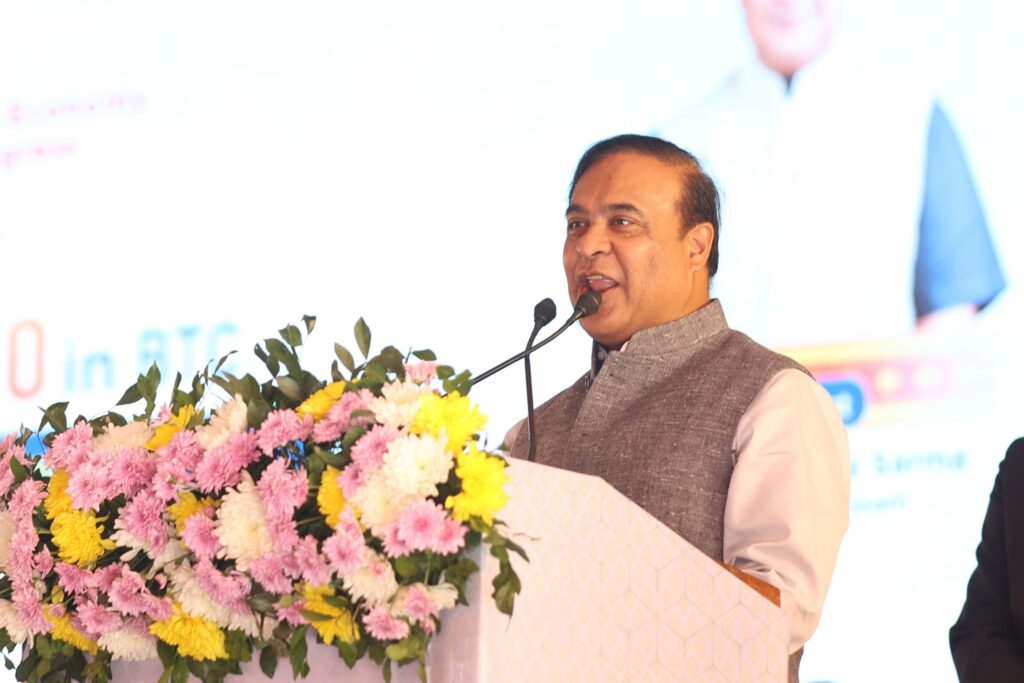
CM Himanta Biswa Sarma launching Orunodoi 3.0 in BTR (Photo: @himantabiswa/X)
Have you heard the exciting news? The Assam government just announced a major financial boost for Orunodoi beneficiaries! Starting January 1, 2026, monthly payments will jump from ₹1,250 to ₹1,500. That’s an extra ₹250 in your pocket every single month. But what does this really mean for you and millions of other families across Assam?
Let me walk you through everything you need to know about this game-changing update to the Orunodoi scheme. Whether you’re already receiving benefits or thinking about applying, this comprehensive guide will answer all your questions.
The Orunodoi scheme has been a lifeline for countless families in Assam since its launch. It’s more than just a cash transfer program – it’s about dignity, empowerment, and giving families the breathing room they need to plan for a better future. The scheme primarily targets women heads of households, recognizing their crucial role in managing family finances and wellbeing.
From its humble beginnings to the upcoming Orunodoi 3.0, this welfare initiative has continuously evolved to better serve the people of Assam. The journey reflects the government’s commitment to reducing poverty and supporting vulnerable families across the state.
Understanding the Payment Increase
Let’s talk numbers, shall we? Right now, if you’re an Orunodoi beneficiary, you’re receiving ₹1,250 every month directly into your bank account. It’s been a helpful amount, but we all know how quickly expenses add up, right? The cost of living keeps climbing, and that’s exactly why this increase matters so much.
Starting January 1, 2026, your monthly payment will increase to ₹1,500. That additional ₹250 might not sound like a fortune, but think about what it means over time. That’s ₹3,000 extra per year – enough to cover school supplies for your kids, medicines for elderly parents, or simply provide a cushion for unexpected expenses.
Here’s where it gets interesting. The extra ₹250 isn’t just random – it’s strategically linked to LPG subsidies. The government has cleverly integrated multiple welfare benefits to maximize the impact on your household budget. Instead of managing separate schemes and payments, everything comes together in one streamlined monthly transfer.
Think of it like this: instead of receiving your Orunodoi payment in one account and waiting for LPG subsidies separately, you’ll get a consolidated amount that covers both. It’s simpler, faster, and honestly, just makes more sense. Who wants to juggle multiple government schemes when you can have everything in one place?
The transition from ₹1,250 to ₹1,500 represents a 20% increase in support. For families living on tight budgets, that’s significant. It could mean the difference between skipping meals or eating properly, between sending children to school or keeping them home, between affording medicines or going without treatment.
What is Orunodoi 3.0?
Now you’re probably wondering – what exactly is this Orunodoi 3.0 everyone’s talking about? Is it just a fancy name for the same old scheme? Not at all! Orunodoi 3.0 represents a major upgrade in how the Assam government delivers financial assistance to its citizens.
Orunodoi 3.0 builds upon the foundation laid by earlier versions but incorporates several improvements based on feedback from beneficiaries and ground-level implementation experiences. The focus is on better targeting, faster processing, and enhanced transparency throughout the system.
One of the biggest differences from Orunodoi 2.0 is the expanded beneficiary base. The government has worked hard to identify and include families that were previously left out due to documentation issues or lack of awareness. The new version also features improved digital infrastructure, making it easier to apply online, check your status, and resolve issues without running from office to office.
The vision behind Orunodoi 3.0 goes beyond just increasing payment amounts. It’s about creating a comprehensive social security net that adapts to changing needs. The integration with other welfare schemes like LPG subsidies is just the beginning. Future plans include linking with healthcare benefits, educational support, and skill development programs.
What makes Orunodoi 3.0 special is its focus on women empowerment. By ensuring that payments go directly to women family members, the scheme recognizes and reinforces their role as financial decision-makers. Studies have consistently shown that when women control household finances, children’s education improves, nutrition gets better, and overall family wellbeing increases.
Eligibility Criteria for Orunodoi 3.0
So who can actually benefit from this scheme? Let’s break down the eligibility criteria so you know exactly where you stand.
First up, age requirements. The scheme primarily targets families where the woman head of household is between 18 and 60 years old. This age range ensures coverage for women during their most economically productive years while also supporting younger and middle-aged family managers.
Income criteria play a crucial role too. Orunodoi 3.0 focuses on economically weaker sections of society. Generally, families with annual incomes below a specified threshold qualify for support. The exact income limit varies slightly based on family composition and location, but the scheme aims to reach those who genuinely need financial assistance.
Here’s something important – you don’t need to be below the poverty line to qualify. The scheme recognizes that many families struggle financially even if they’re technically above official poverty thresholds. If your household faces economic challenges and lacks stable income sources, you might still be eligible.
Documentation requirements have been simplified in Orunodoi 3.0, but you’ll still need some basic paperwork. An Aadhaar card is essential for identity verification and direct benefit transfer. You’ll also need proof of residence in Assam, bank account details, and a recent passport-size photograph. Having a ration card helps, though it’s not always mandatory.
The scheme particularly focuses on vulnerable groups including widows, divorced women, abandoned women, and families with disabled members. Single women heading households receive priority consideration during the application review process.
How to Apply for Orunodoi 3.0
Ready to apply? The process is actually much simpler than you might think. Let me guide you through both online and offline application methods.
For the online application, head over to orunodoi.assam.gov.in – that’s the official portal where everything happens. The website has been redesigned for Orunodoi 3.0 with a more user-friendly interface. You’ll find clear instructions in both English and Assamese, making navigation easier for everyone.
Here’s the step-by-step process: First, click on the “Apply Online” or “Orunodoi 3.0 Online Apply” button on the homepage. You’ll need to register with your mobile number and create a password. Once registered, log in and fill out the application form carefully. The form asks for basic details like your name, age, address, family composition, and economic status.
Make sure you have digital copies of your documents ready before starting. You’ll need to upload your Aadhaar card, bank passbook or canceled cheque, a recent photograph, and residence proof. The portal accepts common image formats like JPG and PDF files, but keep file sizes reasonable for smooth uploading.
After submitting your application, you’ll receive an acknowledgment number. Save this carefully! It’s your reference for tracking application status and resolving any issues that might come up. You can check your application status anytime by logging back into the portal using your credentials.
Prefer doing things the traditional way? No problem! Offline applications are still available through designated government offices in your district. Visit your local block development office or district social welfare office to collect the Orunodoi application form. You can also download the PDF form from the official website, print it, and fill it out by hand.
Complete the form with accurate information, attach photocopies of all required documents, and submit it at the designated office. Officials will review your application and may conduct a verification visit to your home. This is standard procedure – they just want to ensure genuine beneficiaries receive support.
The application process for Orunodoi 3.0 typically opens periodically, so keep an eye on announcements regarding application dates. The last date for applications in 2025 will be announced officially through newspapers, radio, and the official website. Missing the deadline means waiting for the next application window, so stay alert!
Checking Your Beneficiary Status
Applied already? Anxiously waiting to know if you’ve been selected? Here’s how you can check your beneficiary status without any hassle.
The easiest method is online through orunodoi.assam.gov.in. Look for the “View Status” or “Check Beneficiary Status” link on the homepage. You’ll need your application reference number or Orunodoi ID to proceed. Enter the details, solve the captcha to prove you’re human, and click submit. Within seconds, you’ll see your current status.
The status might show different messages. “Application Under Review” means officials are still processing your submission. “Verification Pending” indicates field verification hasn’t been completed yet. “Approved” is what you want to see – it means you’re officially a beneficiary! If you see “Rejected” or “Not Eligible,” don’t panic. There’s usually an option to view rejection reasons and file an appeal if you believe the decision was incorrect.
District-wise beneficiary lists are another way to check your status. The government periodically publishes complete lists of approved beneficiaries organized by district and block. You can download these PDF files from the official website. They’re usually quite large files since they contain thousands of names, so make sure you have a stable internet connection.
Looking for your name in these massive lists can be tedious. Here’s a tip: use the search function in your PDF reader (usually Ctrl+F on computers). Type your name or your village name to quickly locate relevant entries. The lists typically include beneficiary names, village names, block names, and sometimes Orunodoi ID numbers.
What if you can’t find your name in the list but received an approval notification? Sometimes there’s a delay between approval and list publication. Wait a few days and check again. If the discrepancy continues, contact the helpline or visit your local office with your approval message as proof.
Your Orunodoi ID is super important – it’s your unique identification number within the scheme. Once you’re approved as a beneficiary, you’ll be assigned this ID. Keep it safe because you’ll need it for checking payment status, updating details, registering complaints, or changing your bank account. Think of it like your Aadhaar for the Orunodoi scheme.
The LPG Subsidy Connection
Let’s dive deeper into that extra ₹250 and its connection to LPG subsidies. Understanding this helps you appreciate the bigger picture of what the government is trying to achieve.
The Pradhan Mantri Ujjwala Yojana and various LPG subsidy schemes have been running separately for years. Beneficiaries would buy LPG cylinders at market rates and receive subsidies later through separate transfers. This created confusion, delays, and tracking difficulties. Many families struggled to afford cylinders upfront even knowing subsidies would eventually arrive.
The Assam government’s solution? Integrate LPG support directly into Orunodoi payments. That ₹250 increase from January 2026 effectively rolls LPG subsidies into your monthly payment. Instead of waiting for separate subsidy credits, you get a predictable monthly amount that covers both direct cash support and cooking gas assistance.
This integration serves multiple purposes. First, it simplifies welfare delivery – one payment, one date, one account. Second, it gives you more flexibility in how you use the money. If you don’t use LPG or have surplus gas cylinders, that ₹250 still comes to you and can be used for other household needs. Third, it reduces administrative overhead for the government, cutting down on duplicate paperwork and verification processes.
The government’s integrated welfare approach represents modern thinking about social security. Rather than creating dozens of small schemes that confuse beneficiaries and create bureaucratic nightmares, the trend is toward consolidated payments. Countries worldwide have found this approach more effective, efficient, and respectful of beneficiaries’ ability to make their own financial decisions.
Think about it from a practical standpoint. Would you rather receive ₹1,250 from Orunodoi, then wait for a ₹150 LPG subsidy that might come three weeks later, and perhaps another ₹100 from some other scheme a month after that? Or would you prefer receiving ₹1,500 on the first of every month, guaranteed, predictable, and reliable? Most people prefer the latter, and that’s exactly what Orunodoi 3.0 delivers.
District-Wise Implementation
Assam is a diverse state with 35 districts, each with unique characteristics and challenges. How does Orunodoi 3.0 ensure fair coverage across all these areas?
The scheme operates in every single district of Assam, from Dhubri in the west to Tinsukia in the east, from Bongaigaon in the north to Cachar in the south. District-wise implementation ensures local authorities understand ground realities and can adapt processes to regional needs while maintaining overall scheme consistency.
Some districts have higher beneficiary concentrations based on population density and economic conditions. Districts like Kamrup, Nagaon, Sonitpur, and Barpeta have substantial beneficiary numbers simply because they’re more populous. Meanwhile, smaller districts like Majuli or West Karbi Anglong have fewer beneficiaries but equally enthusiastic implementation.
District-wise lists help in several ways. They enable local verification teams to efficiently plan field visits. They help community members cross-check whether their neighbors who should be beneficiaries are actually included. They also create transparency and accountability at the district level, as local officials can be held responsible for ensuring eligible families aren’t missed.
Special focus areas exist where additional efforts are made to reach marginalized communities. Tea garden workers, tribal populations in hill districts, char (riverine island) dwellers, and families in remote border areas receive targeted outreach. Mobile enrollment camps, awareness drives in local languages, and simplified documentation processes help include these often-overlooked groups.
The beauty of district-wise implementation is its flexibility. A family in urban Guwahati faces different challenges than a family in rural Dhubri. District officials have the authority to organize application camps, extend deadlines in disaster-affected areas, and conduct additional verification drives as needed. This decentralized approach, within a centralized framework, makes Orunodoi more responsive and inclusive.
Documents Required for Application
Let’s talk paperwork. I know, I know – nobody enjoys collecting documents, but having everything ready beforehand makes the application process smooth and stress-free.
Your Aadhaar card is absolutely essential. This 12-digit unique identification number has become the backbone of government welfare delivery in India. It enables direct benefit transfer, prevents duplicate entries, and simplifies identity verification. Make sure your Aadhaar is updated with your current address and mobile number. If you haven’t linked your Aadhaar with your phone yet, do it now!
Bank account details come next. You’ll need a bank passbook or a cancelled cheque showing your name, account number, IFSC code, and branch details. The account must be in your name – joint accounts where you’re the primary holder usually work, but accounts solely in someone else’s name won’t. If you don’t have a bank account yet, open one immediately. Most banks offer zero-balance accounts under the Pradhan Mantri Jan Dhan Yojana specifically for people in situations like yours.
Residence proof establishes that you’re a genuine resident of Assam. Acceptable documents include your voter ID card, electricity bill, water bill, house tax receipt, or rent agreement. If you’re living in ancestral property without formal documentation, a certificate from your village headman or gaonburah may suffice. The key is proving you’ve been living in Assam and aren’t just applying opportunistically from another state.
A recent passport-size photograph is necessary for identification purposes. It should be clear, with your face fully visible. Don’t submit old photos from ten years ago – use something recent that actually looks like you now. Many application rejections happen simply because of photo-related issues, so don’t take this lightly.
Your ration card can strengthen your application, especially if it shows Below Poverty Line (BPL) or Antyodaya status. However, not having a ration card doesn’t automatically disqualify you. Many eligible families don’t have ration cards for various reasons, and the government recognizes this.
For KYC (Know Your Customer) and eKYC (electronic KYC) requirements, your Aadhaar serves as the primary document. eKYC is simply the process of verifying your Aadhaar details electronically with the UIDAI database. When you apply online, this happens automatically. For offline applications, officials conduct eKYC using handheld devices that scan your Aadhaar and biometrics.
Additional documents may be required in specific circumstances. Widows need their husband’s death certificate. Divorced or separated women might need relevant court documents. Families with disabled members should provide disability certificates to strengthen their eligibility. Single mothers should provide birth certificates of children.
Here’s a pro tip: Make multiple photocopies of everything. Keep one set for submission, one set for your personal records, and maybe one extra set just in case. Also, never submit original documents unless specifically asked. Always submit photocopies and carry originals only for verification purposes.
Important Dates and Deadlines
Timing is everything, right? Missing a deadline could mean waiting months for the next opportunity, so let’s make sure you’re fully informed about all important dates.
For Orunodoi 3.0 applications in 2025, the government typically announces application windows well in advance through multiple channels. Watch for advertisements in local newspapers, listen to announcements on All India Radio, check the official website regularly, and pay attention to notices at your local block development office. The application last date for 2025 will be clearly communicated at least a few weeks before it arrives.
Usually, application windows remain open for several weeks to ensure everyone gets adequate time to gather documents and complete formalities. Don’t wait until the last day, though! Websites can crash due to high traffic, offices get crowded, and you might face unexpected issues. Apply as early as possible within the window.
Payment credit schedules follow a predictable pattern. Current beneficiaries receive their monthly payments on or around the first day of each month. Some variations occur due to banking holidays and weekends, but generally, you can expect money in your account during the first week. Mark your calendar and check your bank balance accordingly.
The ceremonial launch of Orunodoi 3.0 has been announced for late 2025, with the new payment structure (₹1,500) officially starting from January 1, 2026. This means current beneficiaries will continue receiving ₹1,250 until December 2025, with the increase kicking in from January 2026 onwards.
New beneficiaries approved under Orunodoi 3.0 might start receiving payments from the month following their approval. For example, if you’re approved in October 2025, you might receive your first payment in November 2025 at the current rate of ₹1,250, with the increase applying from January 2026 like everyone else.
Keep track of your payment dates and amounts. Sometimes delays occur due to technical issues or bank problems. If your payment doesn’t arrive within the first week of the month, wait a few more days before raising concerns. Banks sometimes process transfers in batches, causing some accounts to be credited slightly later than others.
Important dates for existing beneficiaries include the annual reverification schedule. The government periodically conducts reverification drives to ensure beneficiary lists remain updated and genuine. If you receive a notice for reverification, respond promptly with requested documents. Ignoring reverification notices can lead to payment suspension.
Benefits Beyond Monthly Payments
Money matters, absolutely. But Orunodoi delivers value beyond those ₹1,500 arriving in your account each month. Let’s explore the broader impact of this scheme.
Women’s empowerment stands at the core of Orunodoi’s philosophy. By ensuring payments go directly to women family members, the scheme strengthens women’s financial independence and decision-making authority. When women control financial resources, household dynamics shift positively. Studies across India have demonstrated that women tend to spend more on children’s education, nutrition, and healthcare compared to male-controlled finances.
Imagine being a woman in a traditional household where you’ve always depended on others for money. Suddenly, you have ₹1,500 coming into your account every month. That’s yours. You decide how it gets spent. That psychological shift is powerful. It builds confidence, earns respect from family members, and creates space for women to plan, save, and invest in long-term goals.
The economic impact on families extends across multiple dimensions. Regular monthly income creates predictability in budgeting. Families know they’ll have at least ₹1,500 coming in, allowing them to plan expenses accordingly. This predictability reduces stress and enables better financial decisions.
For many families, Orunodoi payments cover essential recurring expenses like school fees, electricity bills, or monthly groceries. This frees up other income sources for savings or investments. Some families pool Orunodoi payments with earnings from agriculture or daily wage labor to start small businesses or purchase productive assets like sewing machines or livestock.
The social welfare objectives go beyond individual families. At the community level, schemes like Orunodoi reduce extreme poverty, improve child nutrition, increase school enrollment and attendance, and reduce dependency on informal moneylenders who charge exploitative interest rates. When thousands of families in a village or block receive monthly support, the entire local economy benefits through increased purchasing power.
Health outcomes improve when families can afford nutritious food and timely medical treatment. Educational outcomes improve when children don’t have to drop out due to inability to pay fees or buy books. Long-term economic mobility becomes possible when families aren’t trapped in daily survival mode but can think about future investments.
There’s also a dignity aspect that shouldn’t be underestimated. Welfare schemes sometimes carry social stigma, but Orunodoi has achieved relatively wide acceptance because it’s framed as empowerment rather than charity. Beneficiaries don’t feel they’re receiving handouts; they feel the government is recognizing their economic contributions and supporting their efforts to improve family circumstances.
Common Issues and Solutions
Even well-designed schemes face implementation challenges. Let’s address common issues beneficiaries encounter and how to resolve them effectively.
Bank account changes top the list of frequent concerns. Maybe you closed your old account, switched banks for better service, or moved to a different area and need a local branch. Whatever the reason, you need to update your bank details in the Orunodoi system to continue receiving payments.
The process is straightforward but requires careful attention. Log into the Orunodoi portal using your credentials, navigate to the “Update Bank Account” or “Change Bank Details” section, enter your new bank account number, IFSC code, and upload a copy of your new passbook or cancelled cheque. The system will verify the details with your bank. Once verified (usually within a few days), your future payments will be credited to the new account.
For offline bank account changes, visit your local block development office or district social welfare office with a written application, your Orunodoi ID, old bank account details, new bank passbook, and Aadhaar card. Officials will process the change request manually. This takes longer than online updates, so factor in processing time.
Payment not received? First, check with your bank to confirm there are no issues with your account. Sometimes accounts get frozen due to inactivity or KYC non-compliance. If your account is fine but payment still hasn’t arrived, check your beneficiary status online. Has your account been accidentally marked inactive? Are your details showing correctly?
If everything appears correct from your end but payments still aren’t coming, it’s time to file a complaint. The Orunodoi scheme has a dedicated complaint registration process. You can register complaints online through the official portal, call the customer care helpline number (available on the website), or visit your local office to submit a written complaint.
When registering complaints, be specific. Include your Orunodoi ID, the exact issue you’re facing, any error messages you’ve encountered, and your contact details. Keep your complaint reference number safe. Most complaints get resolved within 15-30 days, though complex issues might take longer.
The customer care support team for Orunodoi handles thousands of queries daily. Be patient when calling, as wait times can be significant during peak hours. Try calling during mid-morning or early afternoon when call volumes are typically lower. Have all relevant information ready before calling to make the process faster.
Mobile number changes require similar update procedures. Since your mobile number is used for SMS notifications about payments, status updates, and important announcements, keeping it current is essential. Update your mobile number through the portal or at your local office using your Aadhaar-linked phone for verification.
Address changes matter too, especially if you’ve moved to a different district. While payments continue regardless of address changes (since they’re bank transfers), updated addresses ensure proper communication and prevent issues during reverification drives.
Technical glitches sometimes prevent online applications or status checks. If the website isn’t loading properly, try using a different browser, clearing your cache and cookies, or accessing the site during off-peak hours (early morning or late evening). Mobile apps, if available, sometimes work better than websites during high-traffic periods.
Future of Orunodoi Scheme
What does the road ahead look like for Orunodoi? Where is this scheme heading in the coming years? Let’s explore the government’s vision and potential developments.
The long-term vision for Orunodoi extends beyond being just a cash transfer scheme. Officials envision it evolving into a comprehensive social security platform that addresses multiple dimensions of poverty and vulnerability. The payment increase to ₹1,500 is just one step in that journey.
Future expansions could include integration with more welfare schemes. Imagine a system where your Orunodoi payment automatically adjusts based on your family’s changing needs – higher amounts during agricultural lean seasons, additional support when children reach school-going age, extra assistance when elderly family members need healthcare. Technology makes such dynamic, responsive welfare possible.
Skill development linkages represent another exciting possibility. Current discussions involve connecting Orunodoi beneficiaries with vocational training programs, helping them acquire marketable skills that lead to sustainable livelihoods. Picture receiving ₹1,500 monthly support while simultaneously learning skills like tailoring, computer basics, beauty therapy, or food processing that could eventually generate independent income.
Healthcare integration is on the horizon too. The government is exploring how Orunodoi can work alongside health insurance schemes to ensure beneficiaries receive comprehensive medical coverage. Some proposals suggest adding health-related conditional components – perhaps bonus payments for families that complete child immunization schedules or undergo regular health check-ups.
Sustainability measures are crucial for any welfare scheme’s longevity. How will the government finance these payments five or ten years down the line? Multiple strategies are being considered including more efficient tax collection, reduced leakage through better targeting, economic growth that increases government revenues, and potentially contributions from corporate social responsibility initiatives.
Technology will play an increasingly central role. Artificial intelligence and machine learning could help identify eligible families more accurately by analyzing multiple data sources. Blockchain technology might enhance transparency and prevent fraud. Biometric authentication could make payment collection more secure while reducing identity theft risks.
The shift toward universal basic income concepts is influencing welfare policy globally, and Orunodoi represents India’s version of experimenting with regular, unconditional cash transfers. While not truly “universal” (it targets specific economic groups), the scheme’s philosophy aligns with UBI principles of giving people money and trusting them to make appropriate spending decisions.
Environmental linkages are being discussed too. Could future versions of Orunodoi incentivize sustainable practices? Perhaps bonus payments for families that adopt solar energy, practice organic farming, or participate in water conservation efforts? Such approaches could align poverty alleviation with environmental goals.
One fascinating possibility is graduation pathways – structured approaches to help beneficiary families eventually “graduate” out of welfare dependency into self-sufficiency. This might involve combining cash support with business mentoring, access to credit, market linkages for products, and ongoing support during the transition period. The goal isn’t to keep families dependent indefinitely but to use welfare as a springboard toward economic independence.
Political sustainability matters too. Schemes like Orunodoi enjoy broad public support, making them difficult to cancel even if governments change. However, ensuring multi-party consensus around social welfare spending, depoliticizing beneficiary selection, and maintaining transparent monitoring systems will be crucial for long-term continuity.
Conclusion
The announcement of Orunodoi payments increasing to ₹1,500 from January 2026 marks a significant milestone in Assam’s journey toward comprehensive social security. This ₹250 increase, particularly through its integration with LPG subsidies, demonstrates the government’s commitment to simplifying welfare delivery while maximizing impact on beneficiary families.
Orunodoi 3.0 represents more than just higher payments. It embodies a modern, responsive approach to poverty alleviation that respects beneficiaries’ dignity and decision-making capacity. By putting money directly in the hands of women family members, the scheme empowers those who often have the least economic freedom but bear the greatest responsibility for family wellbeing.
Whether you’re already receiving benefits or planning to apply, understanding the scheme’s details helps you make the most of this opportunity. From eligibility criteria to application processes, from checking beneficiary status to resolving issues, being informed ensures smooth participation and maximum benefit.
As Orunodoi continues evolving, it’s setting an example for how welfare schemes can adapt to changing needs, embrace technology for better delivery, and focus on empowerment rather than mere assistance. The future looks promising, with potential expansions that could make this scheme even more impactful.
If you’re eligible but haven’t applied yet, now’s the time. If you’re already a beneficiary, stay informed about updates and ensure your details remain current. Together, initiatives like Orunodoi are building a more inclusive, supportive society where every family has a foundation to build their dreams upon.
FAQs
Q1: When will the Orunodoi payment increase to ₹1,500 take effect?
The payment increase from ₹1,250 to ₹1,500 will officially begin on January 1, 2026. All existing beneficiaries will automatically receive the increased amount from that date onward. New beneficiaries approved under Orunodoi 3.0 will receive payments according to the applicable rate at the time their approval becomes effective.
Q2: Can I apply for Orunodoi 3.0 if I don’t have internet access?
Absolutely! While online applications through orunodoi.assam.gov.in are encouraged for faster processing, offline applications remain available for those without internet access. Visit your local block development office or district social welfare office to collect and submit physical application forms. You can also download the PDF form from the website through a friend’s phone or at an internet cafe, print it, and submit it offline.
Q3: What happens if my payment doesn’t arrive on the expected date?
Payments usually credit within the first week of each month, though exact dates vary slightly due to banking processes. If your payment doesn’t arrive by the 10th of the month, first check with your bank to ensure there are no account issues. Then verify your beneficiary status online at orunodoi.assam.gov.in. If everything appears correct but payment is still missing, file a complaint through the official portal or contact the customer care helpline with your Orunodoi ID and bank account details.
Q4: Is the extra ₹250 only for LPG users, or does everyone get ₹1,500?
Everyone gets the full ₹1,500 regardless of whether they use LPG or not. The ₹250 increase is linked to LPG subsidies from an administrative and planning perspective, but it’s not conditional on actual LPG usage. This integrated approach gives beneficiaries flexibility – the entire amount comes to you monthly, and you decide how to spend it based on your family’s needs. Whether you use LPG, firewood, electric cooking, or any combination, you’ll receive the complete ₹1,500.
Q5: Can male family members apply for Orunodoi, or is it only for women?
Orunodoi primarily targets women heads of households, recognizing their crucial role in managing family finances. The scheme is designed for women aged 18-60 who are responsible for household management. However, in exceptional circumstances where there is no adult woman in the household (such as single men caring for elderly parents or disabled family members), applications may be considered on a case-by-case basis. It’s best to check with local officials about specific eligibility if your situation is unusual.
Please don’t forget to leave a review.